


Ridge End Farm in Worcestershire covers 900 acres of owned and rented land and is run by Dave Richards, who milks 500 Holsteins. The farm has been built over three generations of the Richards family, moving from a tenanted holding in 1981, to a structured, efficient dairy unit operating today. With two full-time staff alongside Dave and his son Jim, the focus is firmly on consistency, cow health and a feeding system designed to maximise performance.
A key part of the herd’s success is the use of straights and a well-balanced robotic feeding system, supported by NWF Ultra Robot 17. Each year they produce multi-cut grass silage and chopped maize, these forages act as the background to a system where precision feeding through the robots driving most of the performance. Dave places strong emphasis on ensuring cows receive the right nutrition at the robot, with the feed acting as the main lever for improving yield, cow flow and overall efficiency.
The farm has eight GEA R9500 robots operating on a free access system. Although each one can milk around 75 cows, Dave aims for 52 to 55 cows per robot, this approach keeps the system running smoothly and encourages consistent voluntary visits. After switching to NWF Ultra Robot 17, cows now average around 5 kilograms per day through the robots, with the highest yielders receiving up to 8 kilograms. Since making the change, yields have increased from 35 litres to more than 38 litres per cow per day. Daily robot visits have also risen from 2.7 to just over 3 per cow, and Dave notes that the palatability of the feed has played a major role in driving this improvement. Milk constituents sit at 3.6 percent protein and 4.3 percent butterfat.
The herd has also benefited from moving from a full TMR to a PMR. This has improved the body condition of later lactation cows and works well alongside the precision feeding through the robots. The balance between PMR and robotic concentrates helps maintain consistent intakes without overfeeding, while still supporting high yielders.
Cow health is managed proactively. A professional foot trimmer visits every three weeks, whichhas reduced lameness significantly. In a robotic system, this is essential, as cows are far more willing to walk to the robots and maintain regular milking visits. Along with reduced mastitis levels following the move to robots, the farm has seen a clear reduction in antibiotic use.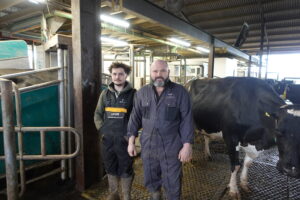
Breeding is carried out on the farm, with all staff trained and qualified in AI. The top 60 percent of cows receive sexed semen to produce replacements, while the rest are served to Angus for easy calving and strong calf growth rates. This structured approach has helped maintain a calving index of around 380 days. “Since the addition of the robots, we’ve been looking more into genetics and how our breeding plan aligns. We’re looking for straight udder and teat placements to help the robots attach, occasionally the robot can miss udders on particularly tall cows or those with crossed teat”, says Dave.
Dave values the ongoing support from NWF Agriculture, particularly through ration planning, nutrition advice and forage analysis. This helps keep the system aligned with the needs of the herd as conditions change.
The combination of utilising straights including NWF Ultra Pro-R, precision robot feeding, and a proactive approach to health and management has shaped Ridge End Farm into a high performing, efficient unit. Improvements in yields, cow flow and overall herd health highlight how a well-targeted feeding strategy, supported by good stockmanship and technical support can bring reliable results.
NWF Agriculture would like to thank the Richards family for their continued business and wish them all the best.
For further information on maximising milk yields through robotic milking systems,
please contact your local NWF Sales Specialist.