



For over 40 years, Grove Farm in Somerset has been home to the Gammon family’s beef and sheep enterprise. Run by Alan, his wife Tracey and his daughter Jess, Grove Farm is home to 130 head of store cattle and 250 Texel Mules, along with Jess’s 60 Dutch Spotted ewes. Alan chose to base the sheep side of the operation on Texels because of the breed’s versatility, with excellent growth rates, body conformation, high killing-out percentages and carcass quality.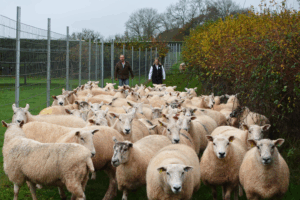
The farm covers 285 acres, which is primarily grassland, with 35 acres set aside for straw production. Building on their simple grassland management practice, ewes and lambs are turned out to grazing pasture before Alan tops the grass once the flock is moved into the next rotation of fields.
“We’ve found managing our grass in this way helps promote a more uniform pasture growth, with all areas of the field starting at the same height. It also helps with weed control by limiting seeding. Grass is then baled ready for Autumn and Winter feeding,” says Alan. On top of driving grassland performance through grazing routines, Alan also reseeds approximately 40 acres each Spring to ensure leys are as productive as possible, along with using the SFI grants available to help with reseeding and operational costs, both helping with finances and environmental benefits/farm offsets.
The introduction of creep feeding was a significant turning point during one of the driest seasons the family had faced. With grass growth stunted by prolonged dry weather, Alan and Jess installed a simple yet effective creep system, allowing lambs to access high-quality starter pellets while still grazing alongside their mothers. This approach ensured lambs received the extra energy and protein required to maintain growth rates despite limited forage availability.
“With a very dry and hot Spring and Summer, we were not getting the grass growth needed for both productive grazing and for anything to be baled for later in the year. After a conversation with Amelia, we decided to try creep feeding for the first time, and we never looked back. Lambs were growing fantastically, both in body composition and in DLWG. We were selling Spring fat lambs at 52kg, with sale prices of upwards of £200 at Sedgemoor market. Amelia helped us take a step back and look at the bigger picture, historically we’ve been a low intensive operation, however stepping back and looking at input vs output costs, supplemental creep feeding has proved nothing but beneficial” adds Alan.
Not only has the increased performance helped drive the farms productivity, shifting the focus to a ‘days on farm’ approach rather than age-based sale has also helped drive farm finances. On top of that, it helps with livestock rotation, plus there has been a reduction in health issues with lambs spending less time on the farm and therefore less opportunity for health issues to present themselves.
Looking ahead, as Jess continues to be more involved in the running of the farm, the family would like to continue to expand on flock and store cattle numbers.
NWF Agriculture would like to thank Alan, Tracey and Jess for their insight into their farm operations and their continued business.
For further information on maximising Ewe and Lamb Performance, please click HERE.