



With the cost of key inputs in the beef sector continuing to rise, such as cereals, fuel and straw, and lower numbers of cattle driving high demand for calves and stores, it is worth assessing your beef and youngstock systems to address any inefficiencies and maximise margins this winter. By improving cattle performance and efficiency, some costs can be mitigated.
This can be achieved by maximising daily liveweight gain, reducing days to slaughter, and ensuring that animals meet specifications for the abattoir or market. Ensuring animals’ nutritional requirements are targeted and met at each stage of their lives, coupled with regular monitoring, will help ensure peak performance. Winter often brings a few challenges. Changes in forage quality, unsettled weather, housing stress and the occasional health issue can all knock cattle off track. A small setback might not look significant at the time, but it can quickly add days to the finishing period and reduce overall margin.
Good quality forage remains the starting point. With forage stocks and quality varying from farm to farm this year, understanding what’s in the clamp has never been more important. A forage analysis gives a much clearer picture of what cattle are receiving and where additional supplementation may be needed.
Getting nutrition right at each stage of growth is equally important
For younger animals, the aim is simple, keep them growing well through winter. It’s a period that can influence how they perform for the rest of their lives, so any setbacks are best avoided. While forage should form the foundation of the ration, forage quality has varied considerably this year and many farms may need additional supplementation to maintain growth rates. A high-quality rearer feed can help maintain growth and ensure cattle continue to receive the energy, protein, minerals and vitamins they need and fill that energy gap during this critical period.
As cattle move into the growing phase, maintaining performance becomes the priority. Whether cattle are being fed compounds or blends alongside forage, the goal is to keep them growing consistently right through the housing period. The simplest way to know whether that’s being achieved is through regular weighing. It gives an accurate picture of daily liveweight gain and can highlight problems before they become costly. Small drops in performance are easy to miss when cattle are seen every day, but they can soon add extra days to the finishing period.
For finishing cattle, the focus turns to hitting target weights and market specifications efficiently. With beef prices where they are, there’s often a temptation to keep cattle for a few extra weeks. However, it’s worth keeping an eye on whether those additional days on feed are genuinely adding value or simply increasing costs. Even with a well-formulated compound or blend, it’s worth reviewing overall mineral and vitamin provision. Deficiencies aren’t always obvious, but they can quietly limit growth and feed efficiency. Getting the balance right helps ensure cattle make the most of the feed in front of them.
Rumen health is another area that can sometimes be underestimated. A well functioning rumen allows cattle to utilise feed more efficiently, particularly when diets are changing at housing or concentrates are being increased. Feed additives such as live yeast can help support fibre digestion and promote more consistent performance during these periods.
Summary 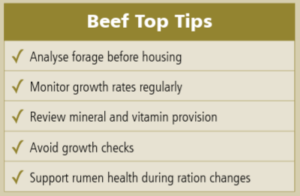
While none of these factors on their own are likely to transform performance overnight, together they can make a significant difference across a group of cattle. With cattle expected to remain in short supply into 2027, the outlook for the sector remains positive. The farms that make the most of the opportunity are likely to be those that focus on the fundamentals: good forage, consistent nutrition, close attention to performance and making sure cattle keep growing from housing right through to finishing. For further information on maximising DLWG, margins and herd productivity, speak to your local NWF Sales Specialist.