


A ruminant meets its metabolisable protein (MP) requirements through a combination of rumen degradable protein (ERDP) and bypass protein, also known as digestible undegradable protein (DUP).
Effective rumen degradable protein feed the microbes in the rumen. At the same time, DUP is absorbed in the small intestine, supplying the sheep directly with the protein required for lean tissue growth, including growing foetus, followed by milk production.
Supplying the correct balance of protein type ensures optimal performance of the animal. As ewes approach lambing, their rumen capacity is restricted by the growing lambs, and rumen outflow is increased. At the same time, their requirement for MP increases as the lambs grow and the ewe prepares for milk production to commence. 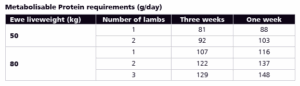
Advantages of high DUP sheep feeds include:
• Better conditioned ewes
• Improved colostrum quality and quantity
• Increased milk production
• Stronger more viable lambs
• Heavier birth weights
• Higher lamb DLWG
Feeding Ultra Pro-R and Ultra Soy as a Straight
With more sheep farmers actively focusing on producing high-quality silage for ewes and increasing pressure for greater sustainability, there is a growing opportunity to include protected soya and rapeseed as a straight feed.
Anecdotal feedback, along with research conducted by John Vipond from SAC and others, has shown that in the last month before lambing, ewes fed on an ad-lib high quality silage with either 100g of soya (per lamb) or 50g of protected soya (Ultra-Soy) fed alongside a mineral can reduce labour and feed costs. This attributed to smaller amounts of supplementary feeding and the utilisation of good quality silage to meet the ewes’ energy requirements. A target of one bale per four ewes of ME 11+ or more is needed. Blood testing on a sample of ewes can be done if there is any doubt in silage quality.
Speak to your local NWF Sales Specialist about the use of protected feeds in ewe diets.