


With milk prices coming under pressure and margins tightening on many farms, attention is increasingly turning to efficiency. One of the biggest opportunities to improve performance often starts before a cow enters the milking herd. The transition period, covering the weeks before and after calving, can have a major influence on milk yield, fertility and health throughout lactation. 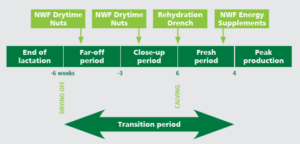
Getting this period right helps cows achieve their potential while reducing the risk of costly setbacks later on. Following a summer that has challenged forage production on some farms, now is a good time to review transition cow diets and ensure plans are in place ahead of housing. With forage quality and availability likely to vary considerably between farms this winter, understanding exactly what’s in front of the cow will be key.
Key priorities for transition cows this winter
Body condition score The ideal calving condition score is 3 – 3.25; calving thinner will reduce lactation and peak yield, and calving overweight will reduce early dry matter intakes and increase chances of milk fever and ketosis. For cows calving overweight, consideration should be given to additional post-calving support, as these animals are generally at greater risk of metabolic challenges during early lactation.
Nutrition
High dry matter intakes will help to keep the rumen expanded and drive intakes post calving, but high energy intakes will drive dangerous weight gain. Maximising dry matter intake before calving remains one of the best ways of supporting cows after calving. Dry cow forages should be clean, fresh and palatable, while avoiding excessive energy intake that can lead to overconditioning. Chopped straw can be a useful tool for maintaining rumen fill and controlling dietary energy levels. If straw is used it must be chopped to approximately 2cm to enable intakes of 3- 5 kg. With forage quality varying more than usual this year, analysing dry cow forage before balancing rations is strongly recommended.
Minerals
Mineral management remains a key part of successful transition cow nutrition. Particular attention should be paid to potassium levels within forage, as elevated potassium can interfere with calcium metabolism and increase the risk of milk fever. Forage analysis can help identify potential issues before they become costly. Supplementary magnesium and, where appropriate, DCAB products can help support a smoother transition into lactation.
Monitor and react
Speak to your NWF sales specialist as soon as symptoms show, small changes can have big effects. For example, a change of silage could shift the potassium levels, if retained cleansings increase, this can be a sign of subclinical milk fever, so increasing magnesium can help. Low colostrum levels could be lower starch in the close up group or an impact of milk fever. Reacting to such symptoms could pay dividends through lactation. While every farm faces different challenges, the fundamentals of transition cow management remain the same. Good forage, balanced nutrition, effective mineral supplementation and close attention to fresh cows can all help support a successful start to lactation. As margins come under pressure, the herds that perform best this winter are likely to be those that focus on getting the basics right before calving rather than dealing with problems afterwards.